Disclosure: We may earn a commission if you buy through links on this page — at no extra cost to you. Learn more.
Statements on this site have not been evaluated by the Food and Drug Administration.
Products and information are not intended to diagnose, treat, cure, or prevent any disease. Learn More
Products and information are not intended to diagnose, treat, cure, or prevent any disease. Learn More
Summary
Vitamin D3 supports calcium homeostasis, immune function, and neuromuscular health; vitamin K2 (MK‑7) helps direct calcium to bones and away from soft tissues. In adults, optimizing 25(OH)D may support mood, sleep, and general cognitive function in low‑status individuals.
Our Picks
Vitamin D + K2 Liquid — Thorne
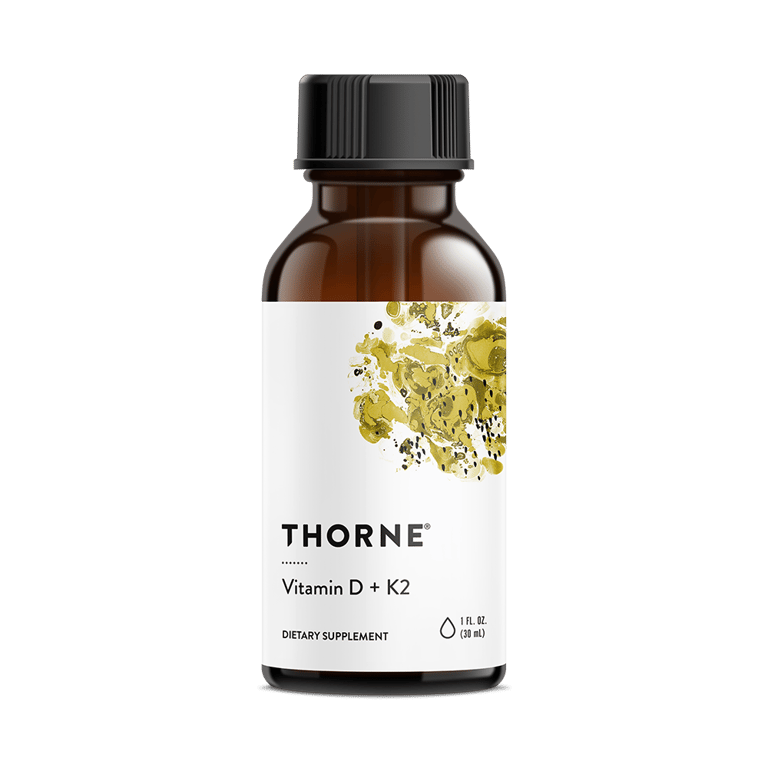
A convenient combination of vitamin D and vitamin K that supports bone, cardiovascular, and immune health. NSF Certified for Sport®.
Mental Clarity, Focus, and Energy
- Mood and cognition: RCTs and meta‑analyses suggest small benefits in mood and fatigue primarily when baseline vitamin D is insufficient.
- Energy: Improvements are indirect via sleep, mood, and neuromuscular function rather than stimulant effects.
- Moderators: Baseline 25(OH)D level, dose, duration (≥8–12 weeks), and co‑nutrients (magnesium, omega‑3s) influence outcomes.
Brain Health
- Mechanisms: Vitamin D receptors in brain regions modulate neurotrophic factors and inflammation; K2 partners with D for calcium handling, indirectly supporting vascular and neural health.
- Human data favor benefits in low‑status cohorts; disease‑modifying effects are unproven.
Gut Health
- Indirect: Adequate vitamin D status supports mucosal immunity; GI tolerability of D3+K2 is generally good when taken with food.
Brain-Gut Axis
- By modulating immune tone and sleep, D3+K2 may reduce stress‑related gut–brain signaling. Direct axis trials are limited.
Evidence Summary
Benefit Area | Evidence Quality | Effect Noted | Notes |
Mental Clarity | Limited–Moderate | Small gains in low vitamin D | Test and personalize |
Focus Enhancement | Limited | Indirect via sleep/mood | Baseline dependent |
Energy Support | Limited–Moderate | Reduced fatigue in low‑status cohorts | ≥8–12 weeks |
Brain Health | Moderate | Neuro‑immune and calcium handling | Mixed endpoints |
Gut Health | Limited–Emerging | Mucosal immunity support | Indirect |
Brain–Gut Optimization | Emerging | Stress and sleep pathways | Limited direct trials |
Typical Dosing Instructions
- Standard dose: D3 1,000–2,000 IU/day for maintenance; personalize to blood levels. K2 MK‑7 90–120 mcg/day commonly paired.
- Timing: With a fat‑containing meal to improve absorption
- Notes: Recheck 25(OH)D after ~8–12 weeks; co‑nutrients magnesium and omega‑3s may support response
Safety Considerations
- General safety: Generally safe at common doses
- Common effects: Minimal when taken with food
- Contraindications and cautions: Monitor calcium with thiazide diuretics or hypercalcemia; K2 can interact with warfarin (vitamin K antagonist)
- Populations: Widely used in pregnancy with clinician guidance; individualize dose
- Monitoring: Track 25(OH)D, calcium if indicated, mood, sleep, and energy
References
- Vitamin D supplementation and depression in adults: systematic review and meta‑analysis of randomized controlled trials, Critical Reviews in Food Science and Nutrition, 2022-09-12
- Vitamin D and depressive symptoms: a network meta‑analysis of 41 randomized controlled trials, Nutrition, 2022-08-01
- Vitamin D Fact Sheet for Health Professionals, NIH Office of Dietary Supplements, 2025-09-25
- Vitamin K and cardiovascular health: evidence and controversies, Nutrition, Metabolism & Cardiovascular Diseases, 2022-04-01