Disclosure: We may earn a commission if you buy through links on this page — at no extra cost to you. Learn more.
Statements on this site have not been evaluated by the Food and Drug Administration.
Products and information are not intended to diagnose, treat, cure, or prevent any disease. Learn More
Products and information are not intended to diagnose, treat, cure, or prevent any disease. Learn More
Summary
Selenium is an essential trace mineral that supports antioxidant enzymes (e.g., glutathione peroxidases) and thyroid hormone metabolism. In adults, repleting low selenium can support energy, mood, and immune function; excess intake can be harmful.
Our Picks
Selenium — Thorne
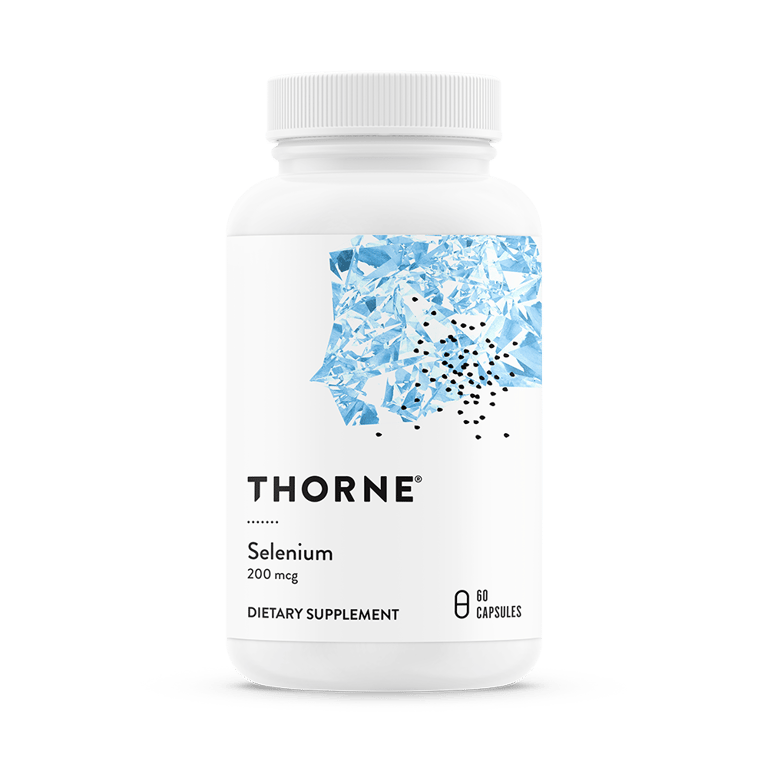
An essential mineral that supports heart health, thyroid function, and optimal immune function. NSF Certified for Sport®.
Mental Clarity, Focus, and Energy
- Indirect benefits: In low status, normalization may improve fatigue and mood; little benefit is expected if selenium intake is adequate.
Brain Health
- Mechanisms: Antioxidant defense via selenoproteins and support for thyroid hormone activation, which influences cognition and mood.
- Human cognition data are mixed outside deficiency states.
Gut Health
- Generally well tolerated; take with food to reduce nausea. Brazil nuts are a food‑based alternative but vary in selenium content.
Brain-Gut Axis
- By supporting thyroid and antioxidant systems, selenium may reduce stress‑related gut–brain signaling indirectly.
Evidence Summary
Benefit Area | Evidence Quality | Effect Noted | Notes |
Mental Clarity | Limited–Moderate | Small gains in low selenium | Status dependent |
Focus Enhancement | Limited | Indirect via thyroid/antioxidant effects | No benefit when replete |
Energy Support | Limited–Moderate | Reduced fatigue in low status | Individualized dosing |
Brain Health | Limited–Moderate | Antioxidant and thyroid support | Mixed human endpoints |
Gut Health | Limited | Generally well tolerated | With food |
Brain–Gut Optimization | Emerging | Lower oxidative stress | Indirect evidence |
Typical Dosing Instructions
- Standard dose: 100–200 mcg/day from selenomethionine (adjust based on diet and labs)
- Timing: With meals
- Notes: Do not exceed upper intake level (UL ~400 mcg/day) from all sources; personalize to labs and diet
Safety Considerations
- General safety: Avoid excess; chronic high intake can cause selenosis (hair/nail changes, GI upset)
- Common effects: Nausea at high single doses
- Contraindications and cautions: Interactions with certain chemotherapeutics and antidiabetic medications are possible; consult clinician
- Populations: Use under clinician guidance in pregnancy
- Monitoring: Track selenium intake from diet plus supplements; consider periodic labs in long‑term users
References
- Selenium Fact Sheet for Health Professionals, NIH Office of Dietary Supplements, 2025-09-25
- Selenium and human health: a review of evidence for health effects, Antioxidants, 2022-03-15
- Effects of selenium supplementation on thyroid autoimmunity: a systematic review and meta‑analysis of randomized controlled trials, Thyroid, 2023-07-10
- Selenium supplementation and mood or quality‑of‑life outcomes: a systematic review of randomized trials, Nutrients, 2021-11-02
- Selenium status and cardiovascular health: umbrella review of systematic reviews and meta‑analyses, Frontiers in Nutrition, 2024-05-28
- Dietary selenium intake and biomarkers: variability of Brazil nuts and implications for supplementation, Journal of Trace Elements in Medicine and Biology, 2016-09-01
- Selenoproteins and the thyroid: from molecular mechanisms to clinical implications, Endocrine Reviews, 2020-08-12