Disclosure: We may earn a commission if you buy through links on this page — at no extra cost to you. Learn more.
Statements on this site have not been evaluated by the Food and Drug Administration.
Products and information are not intended to diagnose, treat, cure, or prevent any disease. Learn More
Products and information are not intended to diagnose, treat, cure, or prevent any disease. Learn More
Summary
Quercetin is a flavonoid polyphenol with antioxidant and anti‑inflammatory effects. In adults, supplementation may support immune balance, vascular function, and GI comfort; cognitive and mood effects are indirect through reduced inflammation and improved recovery.
Our Picks
Quercetin Complex — Thorne
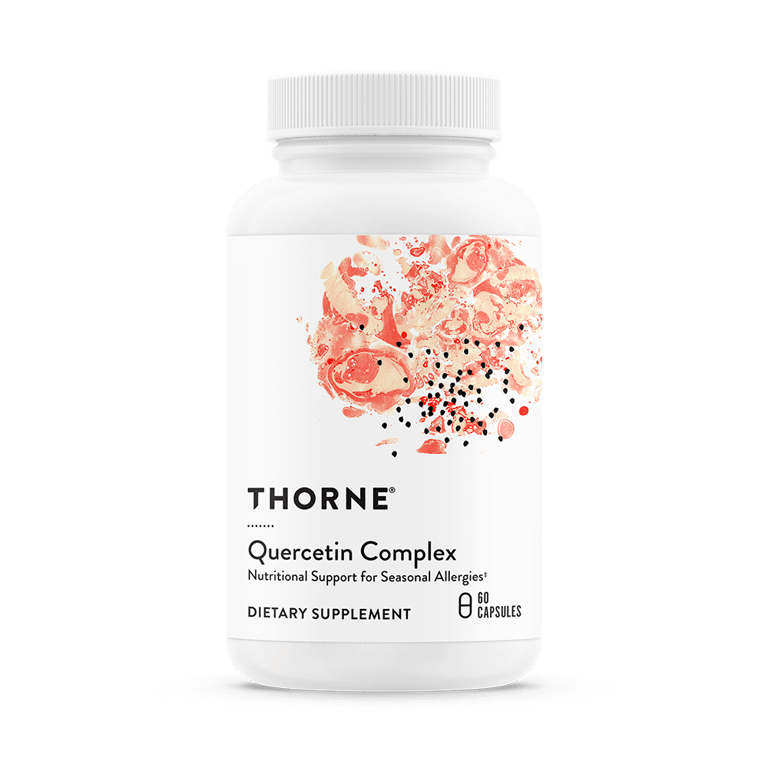
Combines quercetin phytosome and bromelain to support allergy sufferers, enhance immune function, and help reduce bruising and swelling. NSF Certified for Sport®.
Mental Clarity, Focus, and Energy
- Indirect effects: Reduced inflammatory load and improved recovery can translate to steadier daytime energy and focus in some cohorts.
- No stimulant‑like effects; benefits accrue over weeks.
Brain Health
- Mechanisms: Modulates NF‑κB, supports mitochondrial function and redox balance, and may influence neurotrophic signaling in models.
- Human cognition‑specific data are limited; most endpoints relate to fatigue, mood, or recovery.
Gut Health
- May help reduce GI inflammatory signals and support barrier integrity in early human work; GI tolerability improves when taken with food.
Brain-Gut Axis
- By decreasing oxidative and inflammatory signaling and potentially modulating microbiota metabolites, quercetin may indirectly support gut–brain communication.
Evidence Summary
Benefit Area | Evidence Quality | Effect Noted | Notes |
Mental Clarity | Limited–Moderate | Indirect via inflammation/recovery | 500–1,000 mg/day |
Focus Enhancement | Limited | Secondary to improved recovery | Not a stimulant |
Energy Support | Limited–Moderate | Reduced fatigue in subsets | Baseline inflammation matters |
Brain Health | Moderate | Antioxidant and anti‑inflammatory support | Heterogeneous endpoints |
Gut Health | Emerging–Moderate | Barrier and GI comfort signals | With food for tolerance |
Brain–Gut Optimization | Emerging | Lower oxidative/inflammatory crosstalk | Early human signals |
Typical Dosing Instructions
- Standard dose: 500–1,000 mg/day, often split twice daily; consider phytosome forms for absorption
- Timing: With meals to reduce GI upset; pair with vitamin C to support uptake
- Notes: Evaluate after 4–8 weeks; avoid exceeding label dosing without clinician guidance
Safety Considerations
- General safety: Generally well tolerated when taken with food
- Common effects: GI upset or headache in some users
- Contraindications and cautions: Potential interactions with certain antibiotics, cyclosporine, and CYP3A4‑metabolized drugs; theoretical antiplatelet effects
- Populations: Limited pregnancy data; avoid unless clinician‑directed
- Monitoring: Track GI comfort, fatigue, and recovery; discontinue if adverse effects occur
References
- Quercetin: Its Main Pharmacological Activity and Potential Application in Clinical Medicine, Oxidative Medicine and Cellular Longevity, 2020-12-30
- Quercetin in Sports and Exercise: A review, International Journal of Exercise Science, 2023-10-01
- Quercetin, Inflammation and Immunity, Nutrients, 2016-04-01
- Modulatory Properties of Food and Nutraceutical Components Targeting NLRP3 Inflammasome Activation, Nutrients, 2022-01-23
- Quercetin Uses, Benefits & Dosage, Drugs.com, 2024-12-09