Disclosure: We may earn a commission if you buy through links on this page — at no extra cost to you. Learn more.
Statements on this site have not been evaluated by the Food and Drug Administration.
Products and information are not intended to diagnose, treat, cure, or prevent any disease. Learn More
Products and information are not intended to diagnose, treat, cure, or prevent any disease. Learn More
Summary
Probiotics are live microorganisms that, when administered in adequate amounts, confer a health benefit on the host. In adults, strain‑specific products can improve GI symptoms, support mood and stress resilience, and modestly affect sleep quality via gut–brain pathways.
Our Picks
Bacillus Coagulans — Thorne
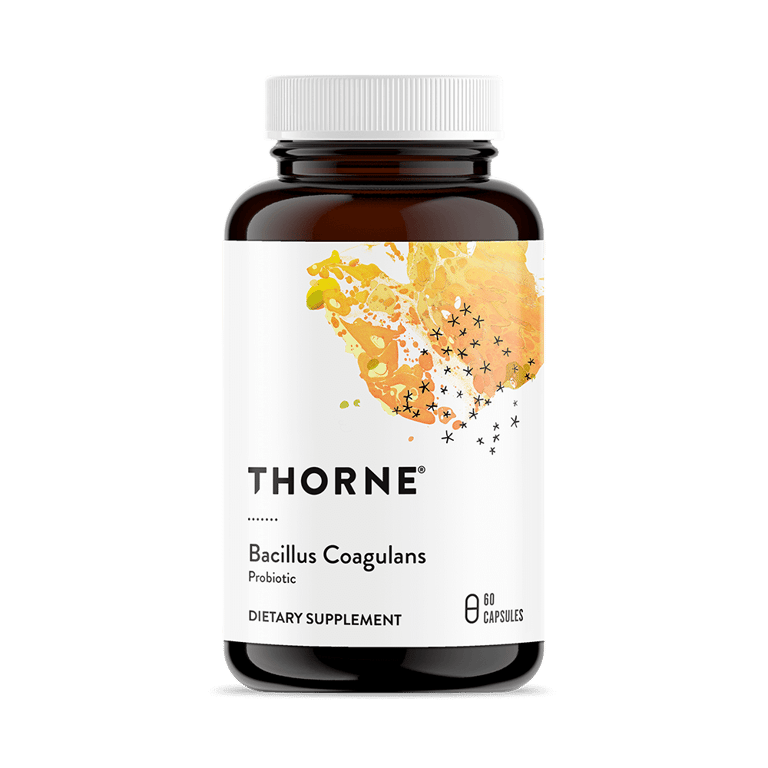
An everyday, all-ages probiotic that promotes gastrointestinal function and supports bowel regularity. NSF Certified for Sport®.
Mental Clarity, Focus, and Energy
- Cognitive effects are indirect and strain‑dependent. Improvements in attention or perceived mental energy are most often secondary to better GI comfort, sleep, or mood.
- Trials targeting mood and stress frequently report downstream gains in daytime focus.
Brain Health
- Mechanisms: modulation of neurotransmitter precursors (e.g., tryptophan metabolism), short‑chain fatty acids, immune signaling, and HPA‑axis tone.
- Human RCTs support mood and stress endpoints for specific strains; cognition benefits are emerging and heterogeneous.
Gut Health
- Strongest evidence base: symptom relief in functional GI disorders, antibiotic‑associated diarrhea risk reduction, and general GI comfort.
- Results are strain‑specific; product quality and dose (1–10+ billion CFU) matter, and benefits often appear within 2–4 weeks.
Brain-Gut Axis
- By altering microbial metabolites, immune tone, and vagal signaling, probiotics can reduce stress reactivity and improve mood and sleep in some cohorts. Effects are not universal and depend on strain, dose, and baseline microbiome.
Evidence Summary
Benefit Area | Evidence Quality | Effect Noted | Notes |
Mental Clarity | Limited–Moderate | Indirect via mood/sleep | Strain‑specific |
Focus Enhancement | Limited–Moderate | Better daytime focus | Dependent on symptom relief |
Energy Support | Limited | Indirect via GI comfort and sleep | Not a stimulant |
Brain Health | Moderate | HPA and immune modulation | Outcome varies by strain |
Gut Health | Moderate–Strong | Symptom relief and AAD risk reduction | Product quality critical |
Brain–Gut Optimization | Moderate | Improved mood and sleep in subsets | Strain‑matched to goal |
Typical Dosing Instructions
- Standard dose: 1–10+ billion CFU daily for 4–12 weeks, matched to outcome and strain
- Timing: With food for tolerance; 2+ hours away from antibiotics
- Form: Refrigerated or shelf‑stable depending on product; verify strain, CFU at end of shelf life, and third‑party testing
- Notes: Reassess after 4–8 weeks; discontinue if no benefit
Safety Considerations
- General safety: Generally safe in healthy adults; transient gas/bloating may occur in the first 1–2 weeks
- Common effects: Mild GI gas or bloating that usually subsides
- Contraindications and cautions: Immunocompromised individuals should consult a clinician; caution with central lines or severe pancreatitis
- Populations: Pregnancy data are generally reassuring for many products but remain product‑specific; consult clinician
- Monitoring: Track GI symptoms, mood, sleep quality, and stool pattern; stop if adverse effects persist
References
- Effects of probiotics on sleep parameters: A systematic review and meta‑analysis, Clinical Nutrition ESPEN, 2024-10-01
- Effect of Probiotics on Psychiatric Symptoms and Central Nervous System Functions in Human Health and Disease: A Systematic Review and Meta‑Analysis, Journal of Clinical Medicine, 2022-01-30
- Probiotics for Mental Health: A Review of Recent Clinical Trials, American Journal of Lifestyle Medicine, 2021-11-25
- The effects of probiotics on depressive symptoms in humans: a systematic review, Annals of General Psychiatry, 2017-02-20