Disclosure: We may earn a commission if you buy through links on this page — at no extra cost to you. Learn more.
Statements on this site have not been evaluated by the Food and Drug Administration.
Products and information are not intended to diagnose, treat, cure, or prevent any disease. Learn More
Products and information are not intended to diagnose, treat, cure, or prevent any disease. Learn More
Summary
Prebiotics are fermentable fibers and substrates (e.g., FOS, GOS, inulin) that selectively stimulate beneficial gut microbes. In adults, they can improve GI regularity, support gut barrier function, and influence mood and stress via microbial metabolites such as SCFAs.
Our Picks
FiberMend — Thorne
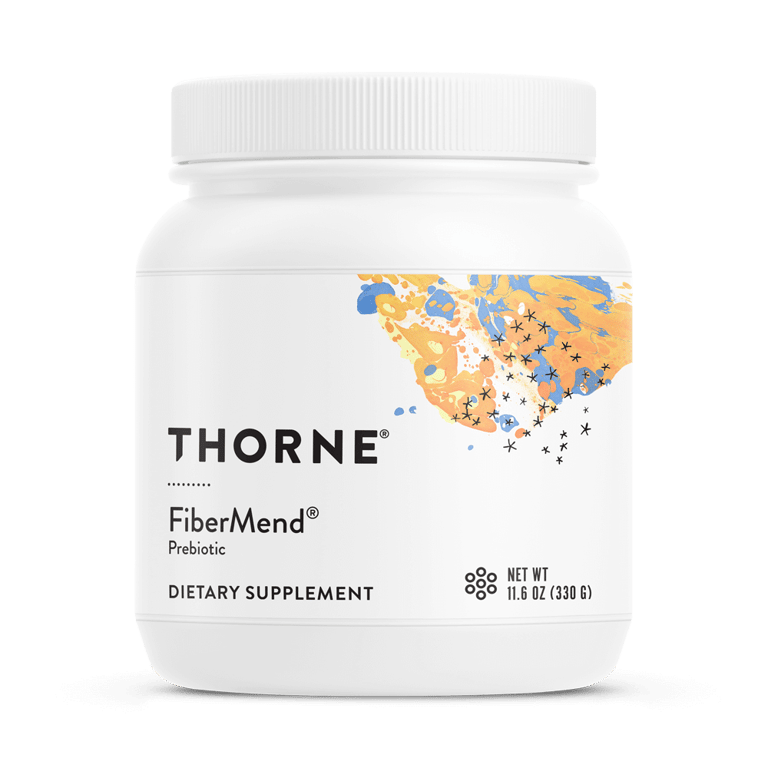
Provides a healthy dose of prebiotic fiber to support GI wellness and promote the growth of beneficial gut bacteria. NSF Certified for Sport®.
Mental Clarity, Focus, and Energy
- Indirect effects: Any cognitive or energy changes are typically secondary to improved GI comfort, sleep, or mood through gut–brain pathways.
Brain Health
- Mechanisms: Increase SCFA production (e.g., butyrate), modulate immune tone, and support neurotransmitter precursor availability via microbial metabolism.
- Human data suggest mood and stress benefits in some cohorts; cognition effects are emerging and heterogeneous.
Gut Health
- Consistent evidence for improved stool frequency and GI comfort; gas/bloating can occur during titration.
- Effects are dose‑ and type‑dependent; start low and increase to tolerance.
Brain-Gut Axis
- SCFAs and immune modulation can reduce HPA‑axis reactivity and support sleep and mood. Effects vary with baseline diet and microbiome.
Evidence Summary
Benefit Area | Evidence Quality | Effect Noted | Notes |
Mental Clarity | Limited–Moderate | Indirect via mood/sleep | Baseline diet dependent |
Focus Enhancement | Limited | Secondary to symptom relief | Type and dose matter |
Energy Support | Limited | Possible via sleep/mood | Not a stimulant |
Brain Health | Moderate | SCFA‑mediated immune effects | Heterogeneous outcomes |
Gut Health | Moderate–Strong | Regularity, comfort | Titrate slowly |
Brain–Gut Optimization | Moderate | Reduced stress reactivity | Diet synergy |
Typical Dosing Instructions
- Standard dose: Start with 2–3 g/day (e.g., inulin, FOS, GOS), increase by 1–2 g every few days toward 5–10 g/day as tolerated
- Timing: With meals to reduce gas; split dosing if needed
- Form: Powder or prebiotic‑containing foods
- Notes: Reassess after 2–4 weeks; reduce dose if excessive bloating
Safety Considerations
- General safety: Generally safe; GI gas/bloating common during titration
- Common effects: Gas, bloating, changes in stool pattern
- Contraindications and cautions: Use caution in severe SIBO or active flares of GI disease; consider clinician guidance
- Populations: Pregnancy generally safe in food doses; supplement decisions should be individualized
- Monitoring: Track GI comfort, stool frequency, sleep, and mood
References
- Inulin‑type fructans and 2′‑fucosyllactose alter microbial composition and appear to alleviate stress‑induced mood state (EFFICAD Trial), American Journal of Clinical Nutrition, 2023-08-30
- Prebiotics for depression: how does the gut microbiota play a role?, Frontiers in Nutrition, 2023-07-06
- Functional constipation and the effect of prebiotics on the gut microbiota: a review, British Journal of Nutrition, 2022-12-02
- Fiber and Prebiotics: Mechanisms and Health Benefits, Nutrients, 2013-04-22