Disclosure: We may earn a commission if you buy through links on this page — at no extra cost to you. Learn more.
Statements on this site have not been evaluated by the Food and Drug Administration.
Products and information are not intended to diagnose, treat, cure, or prevent any disease. Learn More
Products and information are not intended to diagnose, treat, cure, or prevent any disease. Learn More
Summary
Phosphatidylserine (PS) is a phospholipid concentrated in neuronal membranes that supports signaling, synaptic function, and stress responses. In adults, sustained supplementation shows modest improvements in attention and processing speed, with benefits for stress resilience in select contexts.
Our Picks
Phosphatidylserine — Thorne
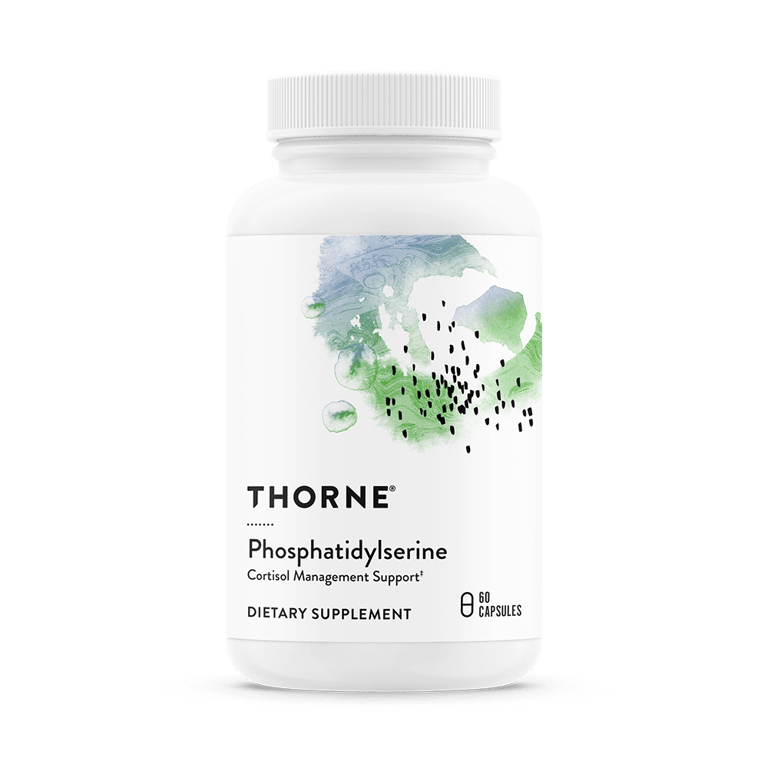
Promotes healthy brain function, supports memory and focus, and modulates cortisol during stress. NSF Certified for Sport®.
Mental Clarity, Focus, and Energy
- Attention and processing: RCTs report small gains in attention, processing speed, and task accuracy with 100–300 mg/day over 8–12+ weeks.
- Stressful performance: PS may blunt stress‑induced cortisol responses and improve error rates under cognitive load.
- Heterogeneity: Outcomes vary by dose, duration, and baseline cognitive status; effects tend to accumulate with consistent use.
Brain Health
- Mechanisms: Restores membrane phospholipid composition, supports neurotransmitter receptor function, and may enhance synaptic plasticity.
- Human data: Benefits most consistent for attention and stress‑related performance; long‑term disease‑modifying data are limited.
Gut Health
- Generally well tolerated; occasional mild GI upset. Taking with food may improve tolerance.
- Direct microbiome or barrier data in humans are limited.
Brain-Gut Axis
- By moderating stress responses and improving task performance under pressure, PS may indirectly aid gut–brain communication in stress‑sensitive GI symptoms. Direct clinical evidence is limited.
Evidence Summary
Benefit Area | Evidence Quality | Effect Noted | Notes |
Mental Clarity | Moderate | Improved processing speed | 100–300 mg/day; ≥8–12 weeks |
Focus Enhancement | Moderate | Better attention and accuracy | Stressful tasks show larger effects |
Energy Support | Limited | Reduced perceived mental fatigue | No stimulant effect |
Brain Health | Limited–Moderate | Membrane and synaptic support | Heterogeneous endpoints |
Gut Health | Limited | Mild GI effects possible | Take with food if sensitive |
Brain–Gut Optimization | Emerging | Stress modulation may aid GI symptoms | Indirect evidence |
Typical Dosing Instructions
- Standard dose: 100–300 mg/day, often split into two doses
- Timing: With meals; avoid late dosing if sensitive to alertness changes
- Form: Soy or sunflower‑derived PS; verify allergen source if needed
- Notes: Allow 8–12 weeks before evaluating cognitive endpoints
Safety Considerations
- General safety: Generally well tolerated at typical doses
- Common effects: Mild GI upset or insomnia in a minority of users
- Contraindications and cautions: Theoretical additive effects with anticoagulants/antiplatelets; check allergen source
- Populations: Limited data in pregnancy or pediatrics; avoid unless clinician‑directed
- Monitoring: Track attention metrics, perceived stress, and GI tolerance; adjust dose if insomnia or GI symptoms occur
References
- Effects of phosphatidylserine in age‑associated memory impairment, Neurology, 1991-05-01
- Cognitive decline in the elderly: a double‑blind, placebo‑controlled multicenter study on efficacy of phosphatidylserine administration, Aging Clinical and Experimental Research, 1993-07-01
- Influence of phosphatidylserine on cognitive performance and cortical activity after induced stress, Nutritional Neuroscience, 2008-06-05
- Safety of phosphatidylserine containing omega‑3 fatty acids in non‑demented elderly: a double‑blind placebo‑controlled trial followed by an open‑label extension, BMC Neurology, 2011-06-28
- Phosphatidylserine, inflammation, and central nervous system diseases, Frontiers in Aging Neuroscience, 2022-08-03