Disclosure: We may earn a commission if you buy through links on this page — at no extra cost to you. Learn more.
Statements on this site have not been evaluated by the Food and Drug Administration.
Products and information are not intended to diagnose, treat, cure, or prevent any disease. Learn More
Products and information are not intended to diagnose, treat, cure, or prevent any disease. Learn More
Summary
Omega‑3 polyunsaturated fatty acids EPA and DHA support brain membrane structure, anti‑inflammatory signaling, and cardiometabolic health. In adults, supplementation shows benefits for mood and cognitive domains in select populations, with strong evidence for triglyceride reduction and safety at typical doses.
Our Picks
Super EPA — Thorne
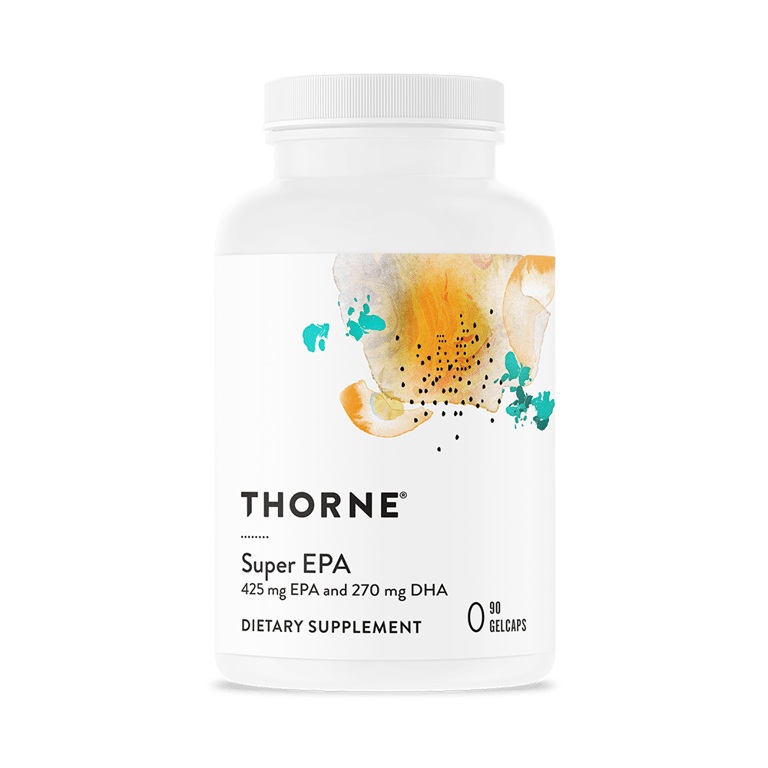
Omega-3 fish oil with a higher level of EPA and DHA in an easy-to-swallow gel cap. NSF Certified for Sport®.
Mental Clarity, Focus, and Energy
- Cognitive performance: Effects in healthy, well‑nourished adults are modest and domain‑specific. Some RCTs report small improvements in attention and processing speed, particularly with higher DHA intake or in low‑baseline omega‑3 status.
- Fatigue and energy: Mixed evidence; perceived energy may improve secondary to mood or sleep quality changes rather than direct stimulant effects.
- Moderators: Baseline omega‑3 index, EPA:DHA ratio, dose, and intervention duration influence outcomes; measurable changes often require 8–12+ weeks.
Brain Health
- Mechanisms: DHA is enriched in neuronal membranes, affecting fluidity, synaptic function, and neuroplasticity; EPA is more anti‑inflammatory and may modulate eicosanoid and resolvin pathways.
- Aging and neurodegeneration: Trials show heterogeneous cognitive outcomes; larger benefits are more likely in those with low baseline omega‑3 or mild cognitive complaints. Consistent cardiometabolic improvements may indirectly support brain health long‑term.
Gut Health
- Omega‑3s can shift inflammatory tone and may modestly influence microbiome composition and gut barrier signaling in early human studies. GI tolerability is generally good; taking with meals reduces fishy aftertaste or reflux.
Brain-Gut Axis
- By lowering systemic inflammation and potentially improving barrier integrity, omega‑3s may reduce pro‑inflammatory gut–brain signaling. Clinical demonstrations linking these pathways to cognitive outcomes are suggestive but not fully established.
Evidence Summary
Benefit Area | Evidence Quality | Effect Noted | Notes |
Mental Clarity | Moderate | Small domain‑specific gains | Greater effects with low baseline omega‑3 index |
Focus Enhancement | Limited–Moderate | Attention/processing speed in subsets | Requires ≥8–12 weeks |
Energy Support | Limited | Indirect via mood/sleep | Not a stimulant |
Brain Health | Moderate | Membrane and anti‑inflammatory support | Heterogeneous cognitive endpoints |
Gut Health | Emerging–Moderate | Possible microbiome and barrier effects | Human evidence early but growing |
Brain–Gut Optimization | Emerging | Reduced inflammatory crosstalk | Mechanistic plausibility > definitive trials |
Typical Dosing Instructions
- Standard dose: Combined EPA+DHA 1,000–2,000 mg/day for general brain and cardiometabolic support
- Timing: With meals to improve absorption and reduce aftertaste
- Form: Triglyceride, re‑esterified TG, or phospholipid forms; algal oil for plant‑based EPA/DHA
- Notes: Aim for an omega‑3 index >8% over time; consider 8–12 weeks before reassessment
Safety Considerations
- General safety: Generally safe at common doses; GI upset or fishy burps are the most frequent complaints
- Common effects: Mild GI symptoms; occasional loose stools at higher doses
- Contraindications and cautions: Anticoagulants or high‑dose NSAIDs may increase bleeding risk; fish/shellfish allergy with marine sources
- Populations: Pregnancy and lactation often benefit from DHA; use allergen‑safe, high‑purity products
- Monitoring: Consider baseline and follow‑up omega‑3 index if targeting specific outcomes; monitor for bruising if on anticoagulants
References
- A Systematic Review of Omega-3 Consumption and Neuroprotective Cognitive Outcomes, American Journal of Lifestyle Medicine, 2022-09-20
- Omega‐3 fatty acids for depression in adults, Cochrane Database of Systematic Reviews, 2021-11-24
- Omega-3 fatty acids and cognitive function, Current Opinion in Clinical Nutrition and Metabolic Care, 2023-01-02
- A systematic review and dose response meta analysis of Omega 3 supplementation on cognitive function, Scientific Reports, 2025-08-20
- Office of Dietary Supplements — Omega-3 Fact Sheet for Health Professionals, NIH Office of Dietary Supplements, 2025-09-25