
Disclosure: We may earn a commission if you buy through links on this page — at no extra cost to you. Learn more.
Statements on this site have not been evaluated by the Food and Drug Administration.
Products and information are not intended to diagnose, treat, cure, or prevent any disease. Learn More
Products and information are not intended to diagnose, treat, cure, or prevent any disease. Learn More
Summary
Magnesium glycinate is a highly bioavailable, gut-friendly form of magnesium bound to the amino acid glycine. It supports sleep quality, stress resilience, and relaxation through GABAergic pathways and is the gentlest magnesium form for those with sensitive digestion.
Our Picks
Magnesium Bisglycinate — Thorne
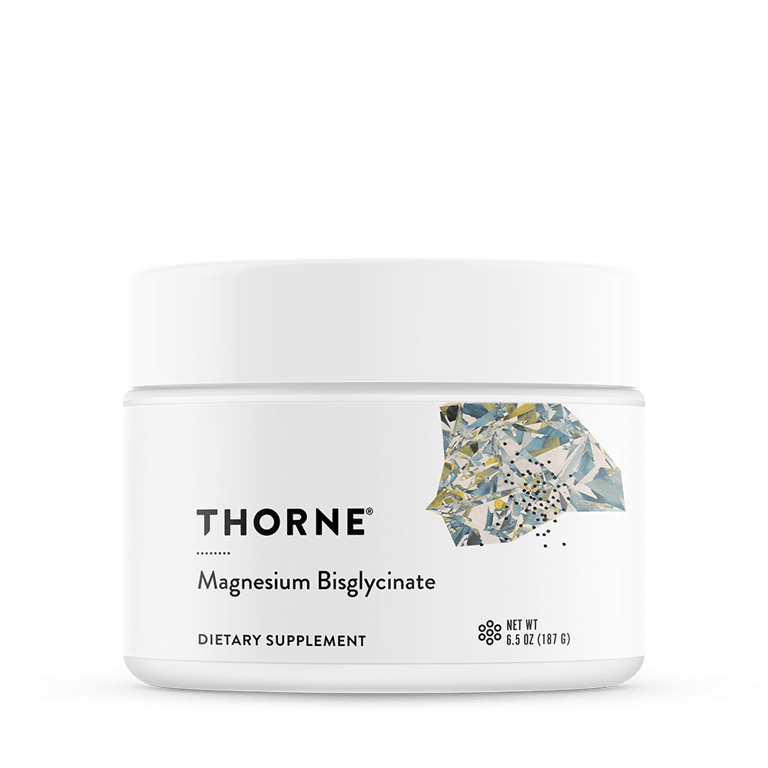
A powdered formula that promotes restful sleep and muscle relaxation. NSF Certified for Sport®.
Sleep Quality and Stress Reduction
- RCTs and observational studies show magnesium supplementation improves sleep latency, sleep efficiency, and subjective sleep quality, particularly in individuals with low magnesium status.
- Glycine itself has calming effects on the nervous system, potentially enhancing the anxiolytic properties of magnesium.
- Benefits typically emerge after 4–8 weeks of consistent evening supplementation.
Gut Health
- High tolerability: Glycinate is chelated to glycine, which minimizes the osmotic laxative effect seen with oxide or citrate forms.
- Well suited for individuals with IBS or sensitive GI tracts who need magnesium repletion without GI upset.
- Supports overall gut comfort by reducing stress-related GI symptoms indirectly.
Brain-Gut Axis
- By improving sleep architecture and reducing perceived stress, magnesium glycinate helps normalize gut-brain signaling.
- Lower cortisol and better vagal tone may reduce stress-induced GI symptoms like cramping or bloating.
Evidence Summary
Benefit Area | Evidence Quality | Effect Noted | Notes |
Sleep Quality | Moderate | Improved latency and efficiency | Stronger in low-status individuals |
Stress Reduction | Moderate | Lower anxiety scores | Glycine adds calming effect |
Gut Health | Limited | Best GI tolerance of all forms | Chelated form prevents laxative effect |
Mood Support | Limited–Moderate | Indirect via sleep and stress | 4–8 weeks for effect |
Brain–Gut Optimization | Emerging | Lower stress-related GI symptoms | Indirect via HPA axis |
Typical Dosing Instructions
- Standard dose: 200–400 mg elemental magnesium as glycinate, taken in the evening
- Timing: 30–60 minutes before bed for sleep support; can split AM/PM if using higher doses
- Form: Look for "magnesium bisglycinate" or "magnesium glycinate chelate" for best absorption
- Notes: Assess total dietary magnesium; allow 4–8 weeks for full sleep and stress benefits
Safety Considerations
- General safety: Generally well tolerated; safest form for long-term use
- Common effects: Rare loose stools even at higher doses due to chelation
- Contraindications and cautions: Use caution in significant renal impairment; separate from certain antibiotics and thyroid medications by 2+ hours
- Populations: Often used in pregnancy under clinician guidance; confirm total magnesium intake from all sources
- Monitoring: Track sleep latency, morning restfulness, and stool consistency; glycinate rarely causes GI upset
References
- Magnesium and Cognitive Health in Adults: A Systematic Review and Meta-Analysis, Advances in Nutrition, 2024-07-14
- The effect of magnesium supplementation on primary insomnia in elderly: A double-blind placebo-controlled clinical trial, Journal of Research in Medical Sciences, 2012
- Magnesium status and supplementation influence vitamin D status: results from a randomized trial, American Journal of Clinical Nutrition, 2018