Disclosure: We may earn a commission if you buy through links on this page — at no extra cost to you. Learn more.
Statements on this site have not been evaluated by the Food and Drug Administration.
Products and information are not intended to diagnose, treat, cure, or prevent any disease. Learn More
Products and information are not intended to diagnose, treat, cure, or prevent any disease. Learn More
Summary
Iron is an essential mineral for oxygen transport and mitochondrial function. In adults with iron deficiency or low ferritin, supplementation can improve fatigue, attention, and exercise tolerance; benefits are minimal in replete individuals and excess iron can be harmful.
Ferrasorb — Thorne
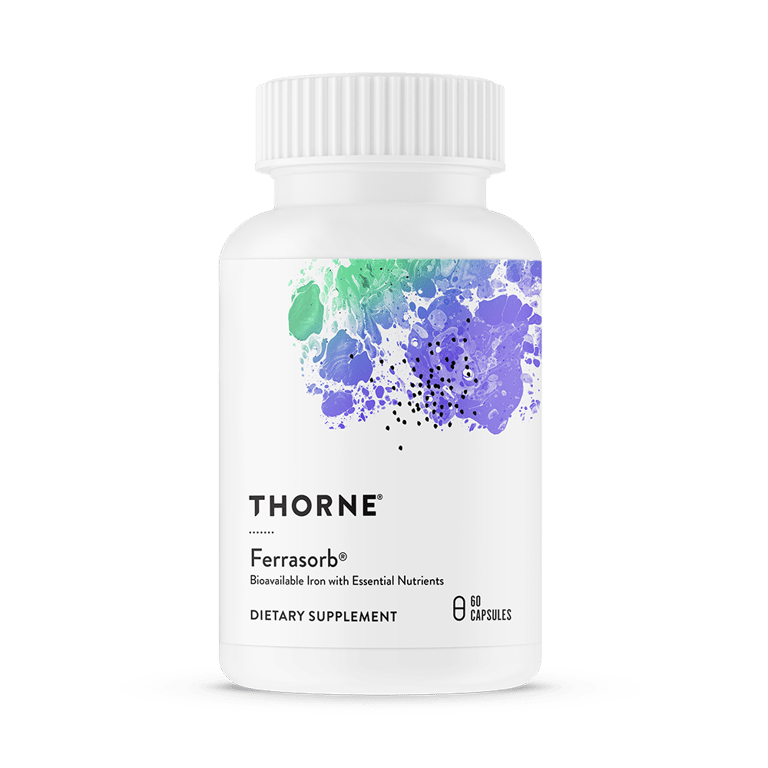
Provides iron, essential B vitamins, and vitamin C for comprehensive nutritional support for anemia. NSF Certified for Sport®.
Mental Clarity, Focus, and Energy
- Cognitive and energy effects: Strongest in iron‑deficient states, with improvements in attention, processing speed, and fatigue after repletion.
- Little to no cognitive benefit is expected if ferritin and hemoglobin are normal.
Brain Health
- Mechanisms: Supports hemoglobin and myoglobin, mitochondrial enzymes, and neurotransmitter synthesis; deficiency impairs oxygen delivery and energy metabolism.
Gut Health
- Tolerability: GI upset, constipation, or nausea are common with certain forms. Taking with food or using gentler forms (e.g., iron bisglycinate) can improve tolerance.
- Absorption: Vitamin C and an empty stomach increase absorption; calcium, coffee/tea, and some grains reduce it.
Brain-Gut Axis
- Restoring iron status can reduce systemic fatigue and stress reactivity, indirectly supporting gut–brain communication. Monitor GI side effects from iron salts.
Evidence Summary
Benefit Area | Evidence Quality | Effect Noted | Notes |
Mental Clarity | Moderate | Improved attention in deficiency | Repletion dependent |
Focus Enhancement | Moderate | Task performance improves with repletion | No benefit when replete |
Energy Support | Strong | Reduced fatigue in deficiency | Hemoglobin/ferritin guided |
Brain Health | Moderate | Neurotransmitter and mitochondrial support | Status dependent |
Gut Health | Limited | GI side effects possible | Formulation matters |
Brain–Gut Optimization | Emerging | Reduced fatigue‑stress signaling | Indirect |
Typical Dosing Instructions
- Standard dose: As directed by clinician; common OTC ranges 18–27 mg elemental iron daily; higher doses short‑term for deficiency
- Timing: Morning or between meals with vitamin C for absorption; take with food if GI upset
- Form: Ferrous bisglycinate or gluconate for gentler tolerance; avoid taking with calcium/coffee/tea
- Notes: Continue several months after normalization to replenish stores, per clinician guidance
Safety Considerations
- General safety: Avoid unnecessary iron if replete; excess iron can be harmful
- Common effects: Constipation, nausea, dark stools
- Contraindications and cautions: Hemochromatosis or iron overload; interactions with thyroid meds, tetracyclines, quinolones—separate by several hours
- Populations: Use under clinician guidance in pregnancy
- Monitoring: Track ferritin, hemoglobin, transferrin saturation; reassess need regularly
References
- Effect of iron supplementation on fatigue in non‑anaemic menstruating women with low ferritin: randomized controlled trial, CMAJ, 2012-07-09
- Iron therapy for unexplained fatigue in non‑anaemic adults: systematic review and meta‑analysis, BMJ, 2003-05-24
- Iron deficiency and cognitive functions, Nutrients, 2020-06-10
- WHO guideline on use of ferritin concentrations to assess iron status, World Health Organization, 2020-11-01
- Iron Fact Sheet for Health Professionals, NIH Office of Dietary Supplements, 2024-06-12
- Iron absorption: inhibitors and enhancers (tea/coffee, calcium, vitamin C), Annals of Nutrition & Metabolism, 2017-03-15
- Oral iron supplementation side effects and tolerability across formulations: systematic review and meta‑analysis, The Lancet Haematology, 2015-10-01