Disclosure: We may earn a commission if you buy through links on this page — at no extra cost to you. Learn more.
Statements on this site have not been evaluated by the Food and Drug Administration.
Products and information are not intended to diagnose, treat, cure, or prevent any disease. Learn More
Products and information are not intended to diagnose, treat, cure, or prevent any disease. Learn More
Summary
Green tea extract standardized for EGCG provides polyphenols with antioxidant and anti‑inflammatory actions. In adults, EGCG can support stress resilience, mood, and metabolic health, with modest cognitive benefits in subsets; GI tolerance and liver safety depend on dose and formulation.
Our Picks
Green Tea Phytosome — Thorne
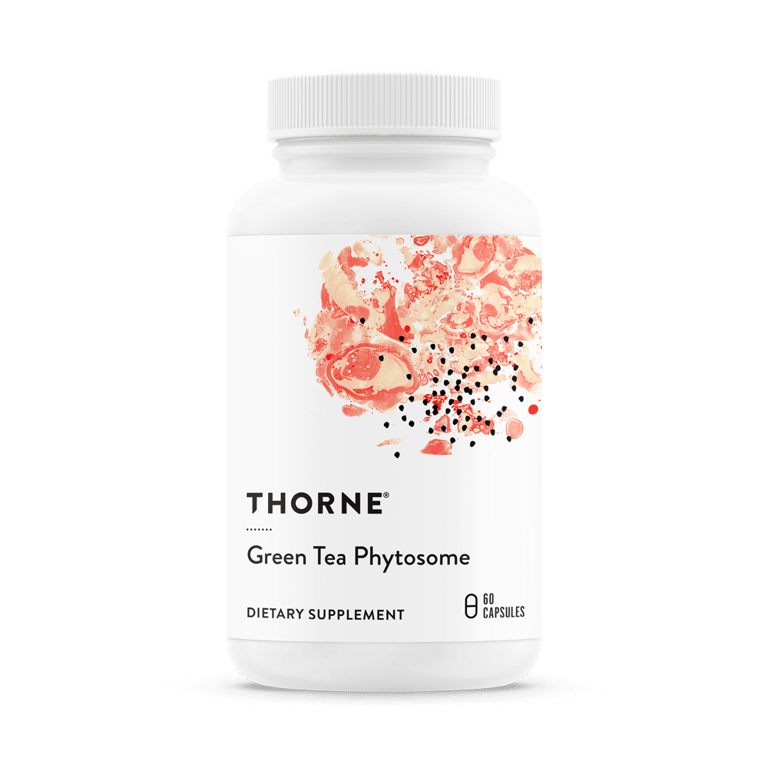
An optimally absorbed form of green tea that supports fat burning and provides liver protection. NSF Certified for Sport®.
Mental Clarity, Focus, and Energy
- Attention and mood: Small RCTs suggest modest improvements in attention and calm alertness at typical supplemental doses; effects are subtle and not stimulant‑like.
- Energy: Perceived energy gains are usually secondary to mood and metabolic effects; avoid late‑day dosing due to possible alerting.
- Moderators: Dose (150–300 mg EGCG/day), caffeine content of the product, baseline stress, and duration (≥4–8 weeks) influence outcomes.
Brain Health
- Mechanisms: Antioxidant and anti‑inflammatory effects, catechol‑O‑methyltransferase interactions, and impacts on neurotrophic signaling in models.
- Human evidence supports mood and stress endpoints; cognitive outcomes are heterogeneous and modest.
Gut Health
- EGCG may modulate microbial composition and reduce GI inflammation markers in early human research. Take with food to reduce nausea.
Brain-Gut Axis
- By reducing oxidative stress and inflammation and influencing microbiota, EGCG may indirectly improve gut–brain signaling and stress responses; clinical demonstrations are still limited.
Evidence Summary
Benefit Area | Evidence Quality | Effect Noted | Notes |
Mental Clarity | Limited–Moderate | Small attentional benefits | 150–300 mg EGCG/day |
Focus Enhancement | Limited–Moderate | Calm alertness | Avoid late‑day dosing |
Energy Support | Limited | Indirect via mood/metabolism | Not a stimulant |
Brain Health | Moderate | Antioxidant and anti‑inflammatory support | Mixed cognition endpoints |
Gut Health | Emerging–Moderate | Microbiome and GI markers | With food for tolerance |
Brain–Gut Optimization | Emerging | Reduced oxidative/inflammatory crosstalk | Early human signals |
Typical Dosing Instructions
- Standard dose: 150–300 mg EGCG daily from a standardized extract
- Timing: Morning or early afternoon; take with food to reduce GI upset
- Form: Decaffeinated standardized extracts if caffeine‑sensitive
- Notes: Evaluate after 4–8 weeks; avoid exceeding label dosing without clinician guidance
Safety Considerations
- General safety: Generally well tolerated at common doses with food
- Common effects: Nausea if taken fasting; alerting if taken late in the day
- Contraindications and cautions: Potential interactions with stimulants, anticoagulants/antiplatelets, and some CYP/COMT‑metabolized drugs; avoid high‑dose extracts in hepatic impairment
- Populations: Limited pregnancy data; avoid unless clinician‑directed
- Monitoring: Track mood, focus, GI tolerance, and any signs of liver discomfort; discontinue if adverse effects occur
References
- Green tea effects on cognition, mood and human brain function: a systematic review, Phytomedicine, 2017-10-15
- Acute effects of tea constituents L‑theanine, caffeine, and epigallocatechin gallate on cognitive function and mood: a systematic review and meta‑analysis, Nutrition Reviews, 2014-08-01
- The Impact of Green Tea and Its Bioactive Compounds on Mood Disorder Symptomology and BDNF: A Systematic Review of RCTs, Biomedicines, 2025-07-07
- Epigallocatechin‑3‑Gallate (EGCG): New Therapeutic Perspectives for Neuroprotection, Aging, and Neuroinflammation, Biomolecules, 2022-02-25
- Epigallocatechin Gallate (EGCG): Pharmacological Properties, Biological Activities and Therapeutic Potential, Molecules, 2025-02-01
- United States Pharmacopeia (USP) comprehensive review of the hepatotoxicity of green tea extracts, Toxicology Reports, 2020-02-15
- Green tea extract–associated acute liver injury: Case report and review, Clinical Liver Disease, 2022-12-12
- LiverTox: Green Tea, National Institutes of Health, 2020-11-20