Disclosure: We may earn a commission if you buy through links on this page — at no extra cost to you. Learn more.
Statements on this site have not been evaluated by the Food and Drug Administration.
Products and information are not intended to diagnose, treat, cure, or prevent any disease. Learn More
Products and information are not intended to diagnose, treat, cure, or prevent any disease. Learn More
Summary
Electrolyte supplements provide sodium, potassium, magnesium, and other minerals to support hydration, nerve conduction, and muscle function. In adults, appropriate electrolyte intake can steady energy and focus during heat, exercise, or illness.
Our Picks
Daily Electrolytes — Thorne
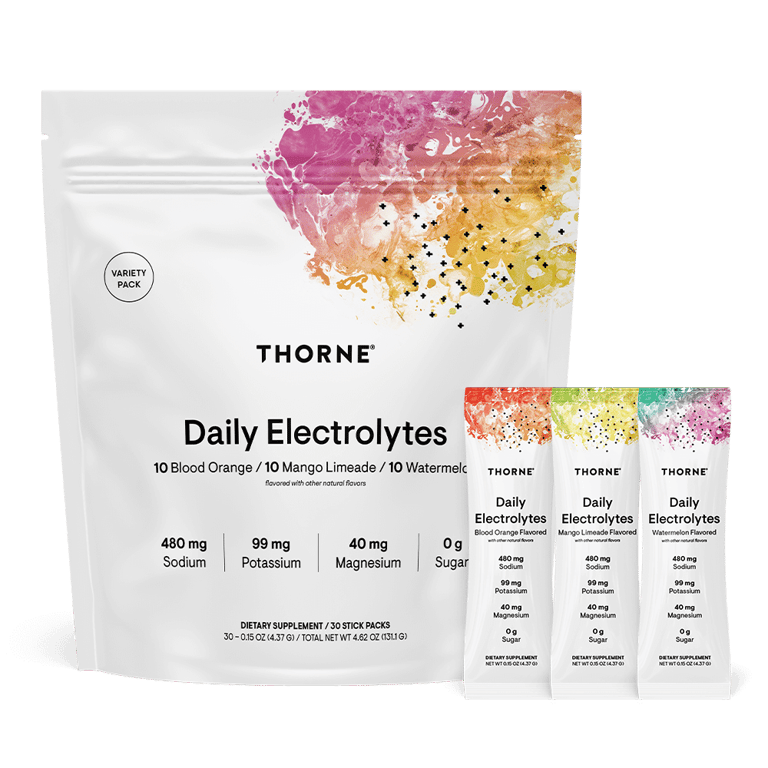
Replenishes electrolytes to optimize cellular rehydration and recovery. NSF Certified for Sport®.
Mental Clarity, Focus, and Energy
- Hydration and focus: Correcting mild dehydration and electrolyte deficits can improve attention and reduce perceived fatigue.
- Exercise and heat: Sodium and potassium replacement support performance and post‑exercise recovery.
Brain Health
- Mechanisms: Maintain neuronal membrane potential and synaptic transmission; magnesium supports neurotransmission and sleep.
- Benefits are indirect and strongest under deficit conditions.
Gut Health
- Generally well tolerated; high‑sodium products may cause GI upset if taken quickly without enough water.
Brain-Gut Axis
- Adequate hydration and electrolyte balance can reduce stress signals and improve GI comfort during exertion or illness.
Evidence Summary
Benefit Area | Evidence Quality | Effect Noted | Notes |
Mental Clarity | Moderate | Improved attention with hydration | Deficit‑dependent |
Focus Enhancement | Moderate | Better task persistence | Exercise/heat contexts |
Energy Support | Moderate | Reduced perceived fatigue | With fluids/carbs as needed |
Brain Health | Limited | Indirect via electrolyte balance | Context‑dependent |
Gut Health | Limited | GI comfort with appropriate dilution | Mix per label |
Brain–Gut Optimization | Emerging | Lower stress signals | Hydration synergy |
Typical Dosing Instructions
- Standard dose: As per label; common targets include 500–1,500 mg sodium/day from electrolytes in addition to diet when sweating heavily
- Timing: During exercise/heat or first thing in the morning if dehydrated; sip with adequate water
- Form: Powder sticks, tablets, or capsules; choose options with balanced potassium and minimal sugar when appropriate
- Notes: Adjust sodium based on sweat rate, climate, and clinician guidance
Safety Considerations
- General safety: Generally safe for healthy adults
- Common effects: Thirst or transient GI upset if concentrated
- Contraindications and cautions: Caution in kidney disease, hypertension, or when on diuretics or RAAS medications
- Populations: Tailor for pregnancy under clinician guidance
- Monitoring: Track body weight changes across exercise, urine color, and perceived thirst; avoid excessive sodium if advised
References
- Hydration, water intake and cognitive performance, Nutrients, 2014-02-11
- Cognitive performance and dehydration: a review, Journal of the American College of Nutrition, 2012-06-01
- American College of Sports Medicine position stand: Exercise and fluid replacement, Medicine & Science in Sports & Exercise, 2007-02-01
- 2015 Third International Exercise-Associated Hyponatremia Consensus Development Conference statement, Clinical Journal of Sport Medicine, 2015-09-01
- Oral rehydration salts (ORS): WHO recommended composition and use, World Health Organization, 2005-01-01
- Sodium replacement and plasma sodium responses during prolonged exercise in the heat, Journal of Applied Physiology, 1992-07-01