Disclosure: We may earn a commission if you buy through links on this page — at no extra cost to you. Learn more.
Statements on this site have not been evaluated by the Food and Drug Administration.
Products and information are not intended to diagnose, treat, cure, or prevent any disease. Learn More
Products and information are not intended to diagnose, treat, cure, or prevent any disease. Learn More
Summary
Digestive enzymes are supplemental proteases, lipases, amylases, and specialty enzymes used to aid macronutrient breakdown and reduce meal‑related GI discomfort. In adults with functional GI symptoms, targeted enzymes can improve post‑meal bloating, heaviness, and gas when matched to the trigger foods.
Our Picks
Advanced Digestive Enzymes — Thorne
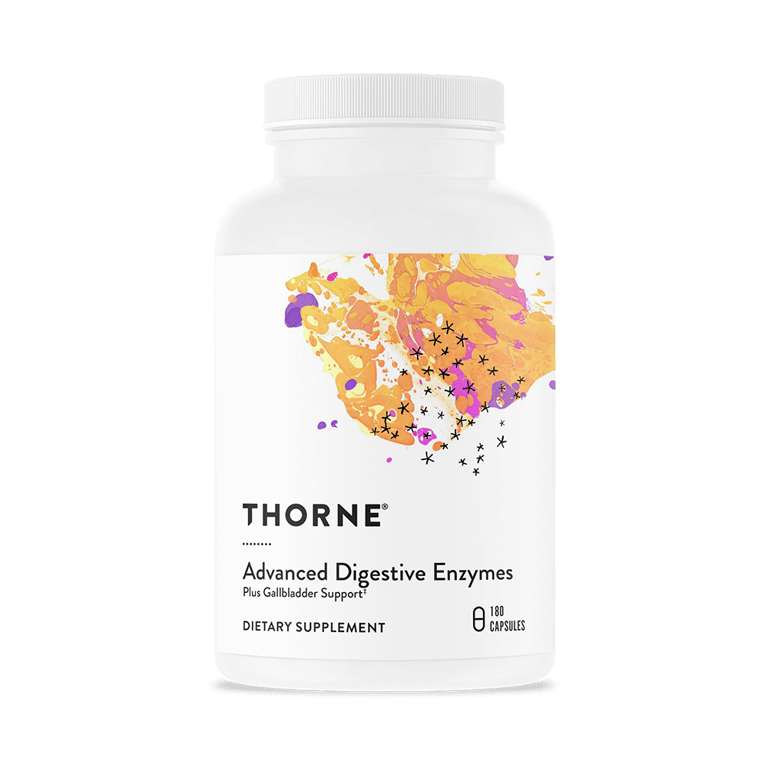
A digestive enzyme blend that supports individuals who experience indigestion, bloating, or have had gallbladder removal. NSF Certified for Sport®.
Mental Clarity, Focus, and Energy
- Indirect effects: Any perceived improvements in mental clarity or energy are typically secondary to better post‑meal comfort and steadier glycemic responses, not direct CNS actions.
Brain Health
- Mechanisms: By improving digestion and reducing post‑prandial distress, enzymes may lower stress reactivity and indirectly support mood and daytime focus; there is limited direct evidence for brain outcomes.
Gut Health
- Evidence supports symptom relief for specific use‑cases (e.g., lactase for lactose intolerance; alpha‑galactosidase for high‑FODMAP beans/legumes; broad blends for mixed meals).
- Response is product‑ and dose‑dependent; start low and titrate based on meal size and macronutrient load.
Brain-Gut Axis
- Reducing meal‑triggered discomfort and gas can lessen sympathetic arousal and improve post‑meal productivity and mood. Effects are indirect and individual.
Evidence Summary
Benefit Area | Evidence Quality | Effect Noted | Notes |
Mental Clarity | Limited | Indirect via improved comfort | Post‑meal focus |
Focus Enhancement | Limited | Less distraction from GI symptoms | Use‑case specific |
Energy Support | Limited | Smoother post‑prandial energy | When symptoms improve |
Brain Health | Limited | Lower stress from symptoms | Indirect pathway |
Gut Health | Emerging–Moderate | Symptom relief with matched enzymes | Lactase, alpha‑galactosidase, blends |
Brain–Gut Optimization | Emerging | Reduced symptom‑driven arousal | Individualized dosing |
Typical Dosing Instructions
- Standard dose: Per product; common ranges include bromelain 200–500 mg, pancreatin per label, lactase 3,000–10,000+ ALU for dairy, alpha‑galactosidase 300–1,200+ GALU for gas‑prone meals
- Timing: With the first bites of the meal; add a second capsule mid‑meal for large portions if needed
- Form: Broad‑spectrum blends for mixed meals; single‑enzyme products for known triggers
- Notes: Titrate to the smallest effective dose; reassess after 2–4 weeks of targeted use
Safety Considerations
- General safety: Generally well tolerated when taken with food
- Common effects: Mild GI irritation if overdosed or taken on an empty stomach
- Contraindications and cautions: Bromelain and high‑dose proteolytics may increase bleeding risk with anticoagulants/antiplatelets; avoid if allergic to source (e.g., pineapple for bromelain)
- Populations: Limited data in pregnancy or pediatrics; use under clinician guidance
- Monitoring: Track meal‑triggered symptoms, stool pattern, and any reflux or irritation; reduce dose if symptoms worsen
References
- Effect of lactase on symptoms and hydrogen breath levels in lactose intolerance: A crossover placebo‑controlled study, JGH Open, 2020-12-01
- Effects of Exogenous Lactase Administration on Hydrogen Breath Excretion and Intestinal Symptoms in Patients with Lactose Malabsorption and Intolerance, BioMed Research International, 2014-05-25
- A randomized double‑blind placebo‑controlled crossover pilot study: Acute effects of the enzyme α‑galactosidase on gastrointestinal symptoms in irritable bowel syndrome patients, Neurogastroenterology & Motility, 2021-02-22
- Efficacy and tolerability of α‑galactosidase in treating gas‑related symptoms in children: a randomized, double‑blind, placebo‑controlled trial, BMC Gastroenterology, 2013-09-24
- Systematic review: pancreatic enzyme treatment of malabsorption associated with chronic pancreatitis, DARE (Quality‑assessed Reviews), 2009-08-05
- Systematic review: efficacy and safety of pancreatic enzyme supplements for exocrine pancreatic insufficiency, Alimentary Pharmacology & Therapeutics, 2010-01-05