Disclosure: We may earn a commission if you buy through links on this page — at no extra cost to you. Learn more.
Statements on this site have not been evaluated by the Food and Drug Administration.
Products and information are not intended to diagnose, treat, cure, or prevent any disease. Learn More
Products and information are not intended to diagnose, treat, cure, or prevent any disease. Learn More
Summary
Curcumin is the primary polyphenol in turmeric, with anti‑inflammatory and antioxidant actions. In adults, enhanced‑bioavailability curcumin formulations can modestly improve mood, joint discomfort, and inflammatory markers; cognitive and gut benefits are emerging and population‑dependent.
Our Picks
Curcumin Phytosome — Thorne
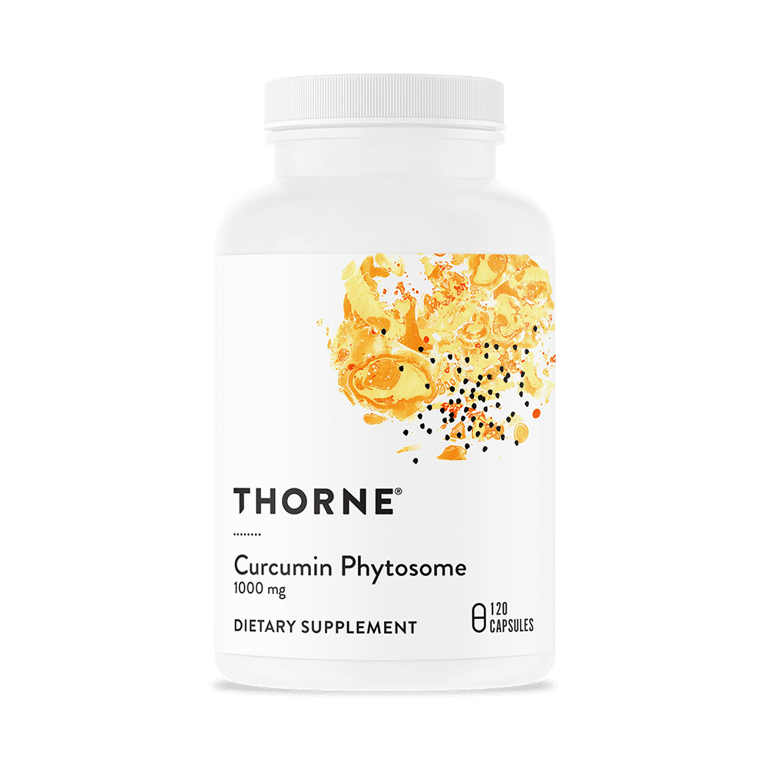
Well-absorbed curcumin support for joint stiffness, muscle soreness, and a healthy inflammatory response. NSF Certified for Sport®.
Mental Clarity, Focus, and Energy
- Cognitive performance: Small RCTs report improvements in attention and processing speed in subsets, particularly in older adults or those with low‑grade inflammation.
- Energy and fatigue: Some trials note reduced fatigue; effects are indirect via inflammatory tone rather than stimulatory.
- Moderators: Bioavailability enhancers (e.g., piperine, phospholipids), dose (500–1,000 mg/day curcuminoids), and duration (≥8–12 weeks) strongly influence outcomes.
Brain Health
- Mechanisms: Downregulates NF‑κB and pro‑inflammatory cytokines, supports antioxidant defenses, and may influence neurotrophic signaling.
- Human evidence suggests modest benefits for mood and cognitive domains in certain cohorts; disease‑modifying effects remain unproven.
Gut Health
- May support gut barrier function and modulate microbiota composition in early human work; most robust signal is reduction in GI inflammatory symptoms in select conditions.
- Tolerability: reflux or GI upset can occur, especially on an empty stomach; take with meals.
Brain-Gut Axis
- Through systemic anti‑inflammatory actions and potential barrier support, curcumin may reduce pro‑inflammatory gut–brain signaling; direct axis trials are limited.
Evidence Summary
Benefit Area | Evidence Quality | Effect Noted | Notes |
Mental Clarity | Limited–Moderate | Small gains in attention/processing | Enhanced‑bioavailability forms |
Focus Enhancement | Limited | Task‑specific improvements | Older or inflamed cohorts |
Energy Support | Limited | Reduced fatigue via inflammation | Not a stimulant |
Brain Health | Moderate | Anti‑inflammatory and antioxidant support | Heterogeneous endpoints |
Gut Health | Moderate | Symptom relief and barrier support signals | Take with meals |
Brain–Gut Optimization | Emerging | Reduced inflammatory crosstalk | Limited direct trials |
Typical Dosing Instructions
- Standard dose: 500–1,000 mg/day curcuminoids in enhanced‑bioavailability form
- Timing: With meals to improve tolerance and absorption
- Form: Curcumin with piperine, phospholipid complexes, or other enhanced forms
- Notes: Evaluate after 8–12 weeks; consider avoiding piperine if on multiple medications due to metabolism interactions
Safety Considerations
- General safety: Generally safe at typical doses; GI upset or reflux possible
- Common effects: Mild GI symptoms, yellow stool
- Contraindications and cautions: Anticoagulants/antiplatelets increase bleeding risk; potential interactions with certain chemotherapeutics; piperine can affect CYP metabolism
- Populations: Limited pregnancy data; avoid unless clinician‑directed
- Monitoring: Track GI symptoms, inflammatory markers if clinically indicated, and cognitive/mood changes
References
- Memory and Brain Amyloid and Tau Effects of a Bioavailable Form of Curcumin in Non‑Demented Adults: A Double‑Blind, Placebo‑Controlled 18‑Month Trial, American Journal of Geriatric Psychiatry, 2018-03-01
- The effect of curcumin differs on individual cognitive domains across different patient populations: a systematic review and meta‑analysis, Pharmaceuticals, 2021-11-28
- The effect of curcumin supplementation on cognitive function: an updated systematic review and meta‑analysis, Frontiers in Neuroscience, 2025-04-16
- Curcumin supplementation and vascular and cognitive function in chronic kidney disease: a randomized controlled trial, Nutrients, 2024-08-14
- Improving cognitive function with intermittent dose escalation of curcumin extract in chemotherapy‑induced cognitive impairment patients: a randomized controlled trial, Advances in Traditional Medicine, 2024-01-17
- Clinical use of curcumin in depression: a meta‑analysis, Psychological Medicine, 2025-05-02
- Effect of curcumin supplementation on symptoms of anxiety: A systematic review and meta‑analysis of randomized controlled trials, Complementary Therapies in Medicine, 2024-08-01
- Anti‑inflammatory effects of oral supplementation with curcumin: a systematic review and meta‑analysis of randomized controlled trials, Nutrition Reviews, 2020-12-21
- Effect of curcumin on C‑reactive protein as a biomarker of systemic inflammation: An updated meta‑analysis of RCTs, Phytotherapy Research, 2022-01-01
- Profiling inflammatory biomarkers following curcumin supplementation: an umbrella meta‑analysis of randomized clinical trials, Evidence‑Based Complementary and Alternative Medicine, 2023-01-16
- Efficacy of a curcumin extract (Curcugen™) on gastrointestinal symptoms and intestinal microbiota in adults with self‑reported digestive complaints: a randomized, double‑blind, placebo‑controlled study, BMC Complementary Medicine and Therapies, 2021-01-21
- Effects of turmeric and curcumin dietary supplementation on human gut microbiota: a double‑blind, randomized, placebo‑controlled pilot study, Journal of Evidence‑Based Integrative Medicine, 2018-08-08