Disclosure: We may earn a commission if you buy through links on this page — at no extra cost to you. Learn more.
Statements on this site have not been evaluated by the Food and Drug Administration.
Products and information are not intended to diagnose, treat, cure, or prevent any disease. Learn More
Products and information are not intended to diagnose, treat, cure, or prevent any disease. Learn More
Summary
Creatine monohydrate is a cellular energy buffer that replenishes ATP via the phosphocreatine system. Beyond performance benefits, research interest has expanded to cognition under energy stress, neuroprotection, and potential roles in gut barrier integrity and the brain–gut axis.
Great Choices
Creatine | Thorne
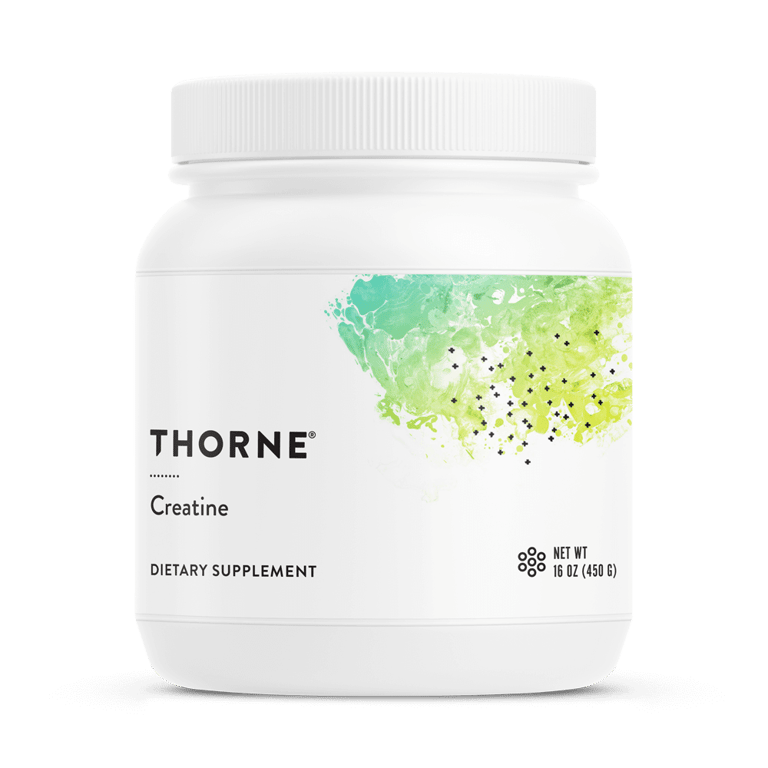
High-quality creatine to support lean muscle mass, endurance, cellular energy, and brain function.* NSF Certified for Sport®.
Creatine | Thorne
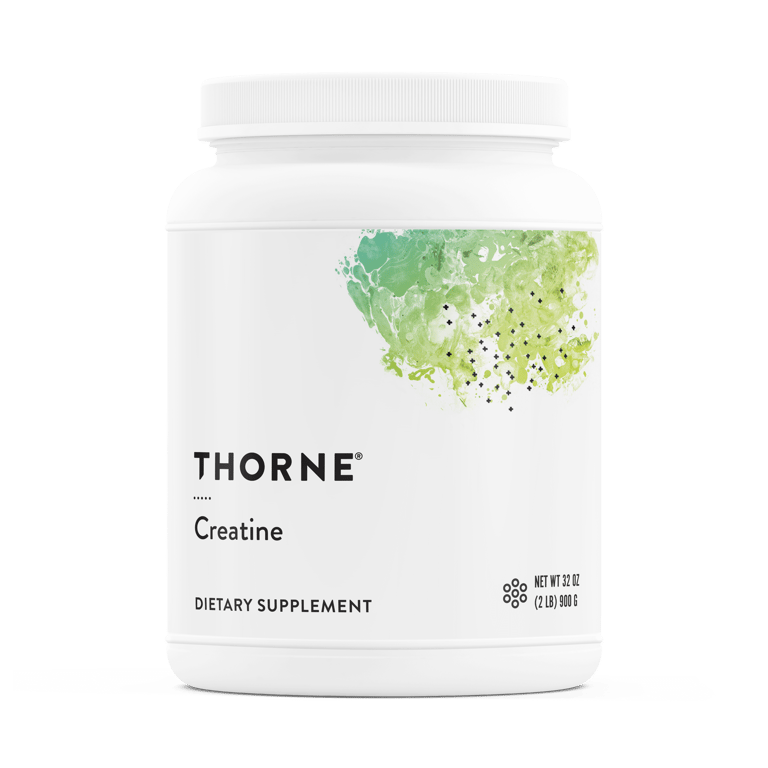
High-quality creatine for lean muscle mass, endurance, cellular energy, and brain function. NSF Certified for Sport®.
Creatine | Thorne
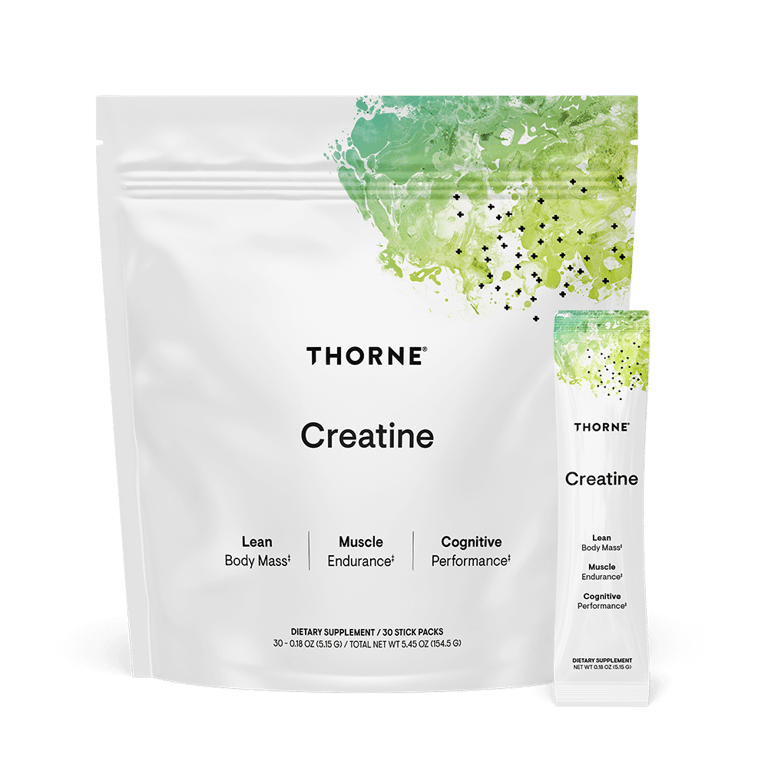
High-quality creatine in convenient travel packs to support lean muscle mass, endurance, cellular energy, and brain function.* NSF Certified for Sport®.
Mental Clarity, Focus, and Energy
Meta-analyses and controlled trials indicate small but task- and context-dependent cognitive effects. Benefits are more consistent when brain energy demand is high or creatine status is low, such as sleep deprivation, vegetarian/low-meat diets, or complex working-memory tasks. A 2024 meta-analysis found modest improvements in specific domains (e.g., reaction time, working memory) with heterogeneity across protocols.[3] A 2023 systematic review focused on memory reported improvements vs placebo in healthy individuals, with larger effects in tasks taxing short-term memory and in populations with lower baseline creatine.
Acute high-dose studies during sleep deprivation show faster processing speed and improved cognitive performance, consistent with restored high-energy phosphates on brain spectroscopy. These findings suggest creatine may mitigate mental fatigue under acute energy stress, though optimal acute dosing and generalizability require further study.
Overall: Evidence Quality = Moderate. Effects appear context specific, with stronger signals under energy strain and in lower baseline creatine status.
Brain Health
Mechanistically, creatine supports neuronal bioenergetics, stabilizes cellular energy charge, and may reduce excitotoxicity and oxidative stress. Reviews summarize potential neuroprotective roles across conditions characterized by impaired energy metabolism, with mixed human clinical outcomes to date outside of specific indications.
Preclinical and clinical-theoretical work also explores applications from traumatic and hypoxic injury to neurodegeneration; translational significance remains under evaluation, with dose, duration, and tissue uptake as key variables.
Overall: Evidence Quality = Emerging to Moderate for general neuroprotection; stronger mechanistic plausibility than definitive clinical endpoints in healthy adults at standard doses.
Gut Health
Creatine contributes to epithelial energy homeostasis. In animal models, enhancing epithelial ATP via the creatine pathway helped maintain barrier integrity and reduced colitis severity, suggesting a role in mucosal resilience.
Population-level observational work on dietary creatine and bowel outcomes is emerging and hypothesis-generating, not causal.[13] Direct clinical trials of creatine supplementation on microbiota composition and gut symptoms in humans are limited; fish and rodent data suggest shifts in metabolites and microbiome with creatine intake, but human relevance is uncertain.
Overall: Evidence Quality = Emerging. Preclinical barrier support is encouraging; human interventional gut outcomes remain limited.
Brain-Gut Axis
By sustaining epithelial and neural high-energy phosphate buffering, creatine may indirectly influence gut–brain signaling via barrier integrity, immune tone, and vagal or metabolic pathways. Animal data show barrier preservation in colitis models, which could reduce pro-inflammatory signaling to the brain.[16] Early human cognitive findings under sleep deprivation suggest central bioenergetic benefits that, in theory, complement peripheral gut effects; however, explicit trials connecting both nodes of the axis are sparse.
Overall: Evidence Quality = Emerging. Conceptually plausible through energy metabolism and barrier effects; direct human axis trials are limited.
Evidence Summary
Benefit Area | Evidence Quality | Effect Noted | Notes |
Mental Clarity | Moderate | Small improvements in reaction time and complex memory tasks, especially under energy stress | 2024 meta-analysis; larger effects in sleep deprivation, low creatine status populations |
Energy Support | Moderate | Enhanced cognitive performance under high energy demand | Consistent with ATP buffering; heterogeneity across protocols |
Brain Health | Emerging–Moderate | Mechanistic neuroprotection; mixed clinical endpoints | Narrative and systematic reviews; translational uncertainties remain |
Gut Health | Emerging | Barrier support and reduced colitis severity in models | Preclinical PNAS data; limited human intervention data |
Typical Dosing Instructions
- Standard dose: 3–5 g/day creatine monohydrate. Optional loading: ~20 g/day split into 4 doses for 5–7 days, then 3–5 g/day maintenance.
- Timing: Any time; taking with food and adequate fluid can improve GI tolerance. Acute high-dose protocols have been used in research during sleep deprivation, but are not standard practice.
- Form: Creatine monohydrate (CrM) has the strongest evidence base. Micronized CrM may improve solubility; alternative forms have less comparative evidence.
Safety Considerations
- General safety: Clinical trials and reviews indicate creatine monohydrate is generally well tolerated in healthy adults, with no consistent adverse effects on kidney function when used at recommended doses. Transient increases in serum creatinine reflect creatine metabolism rather than renal injury.
- Common effects: Occasional GI discomfort or water retention; mitigate with divided dosing, full dissolution, and adequate hydration.
- Contraindications and cautions: Pre-existing kidney disease, concurrent nephrotoxic medications, or dehydration risk warrant medical oversight. Consider caution with uncontrolled hypertension or during acute illness. Insufficient data for pregnancy or breastfeeding; avoid unless clinician-directed.
- Populations: Vegetarians or low-meat eaters may experience larger cognitive or performance effects due to lower baseline creatine stores.
- Monitoring: In at-risk individuals, consider baseline and follow-up renal labs. Interpret serum creatinine in context, recognizing supplementation-related elevations.
References
- The effects of creatine supplementation on cognitive function in adults: a systematic review and meta‑analysis, Frontiers in Nutrition, 2024-07-12
- Effects of creatine supplementation on memory in healthy individuals: a systematic review and meta‑analysis of randomized controlled trials, Nutrition Reviews, 2023-04-13
- Creatine supplementation and brain health: Mechanisms and potential applications, Sports Medicine, 2023-06-27
- Creatine supports intestinal barrier function and reduces colitis severity in models, Proceedings of the National Academy of Sciences, 2014-05-27
- Safety of creatine supplementation: A critical review, Journal of the International Society of Sports Nutrition, 2017-08-24