Disclosure: We may earn a commission if you buy through links on this page — at no extra cost to you. Learn more.
Statements on this site have not been evaluated by the Food and Drug Administration.
Products and information are not intended to diagnose, treat, cure, or prevent any disease. Learn More
Products and information are not intended to diagnose, treat, cure, or prevent any disease. Learn More
Summary
Coenzyme Q10 (CoQ10) is a mitochondrial cofactor central to ATP production and antioxidant defense. In adults, supplementation can reduce fatigue and support cognitive performance indirectly via improved cellular energy, with stronger signals in low‑status or higher‑demand contexts.
Our Picks
CoQ10 — Thorne
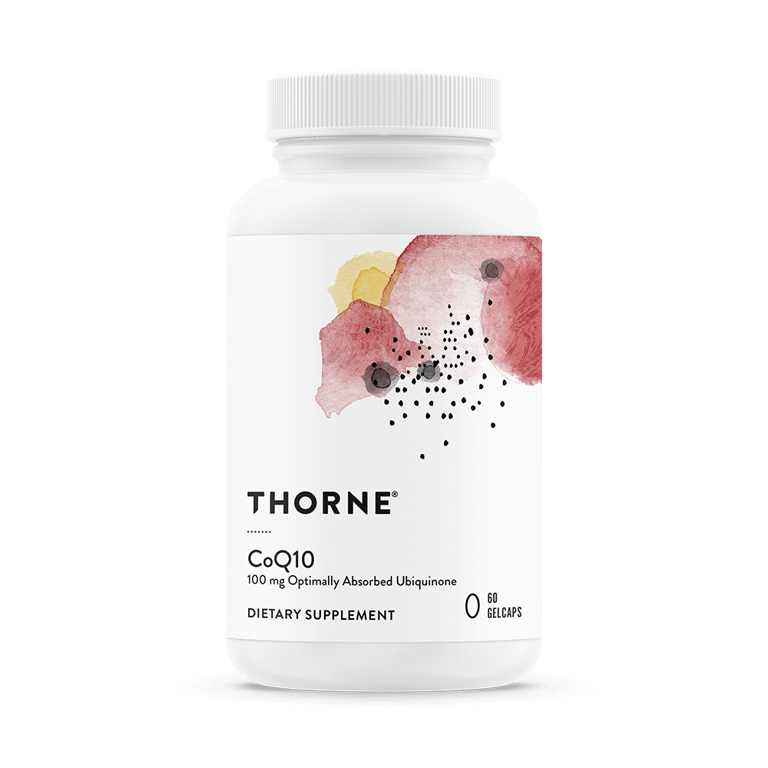
Supports cardiovascular and neurological health, cellular energy production, and healthy aging with well-absorbed CoQ10. NSF Certified for Sport®.
Mental Clarity, Focus, and Energy
- Energy and fatigue: Multiple trials show reductions in fatigue and improved exercise or daily energy, especially with 100–200 mg/day.
- Cognition: Small studies suggest improvements in attention and processing speed in subsets; effects accrue over weeks and are not stimulant‑like.
- Moderators: Baseline CoQ10 status, dose, duration (≥8–12 weeks), and formulation (ubiquinol vs ubiquinone) influence outcomes.
Brain Health
- Mechanisms: Supports mitochondrial electron transport and acts as a lipid‑phase antioxidant, potentially reducing oxidative stress and improving neuronal energy availability.
- Human data: Benefits cluster around fatigue, mood, and attentional measures; disease‑modifying claims remain unproven.
Gut Health
- Generally well tolerated with minimal GI effects; absorption improves with fat‑containing meals.
Brain-Gut Axis
- By improving cellular energy and reducing oxidative stress, CoQ10 may indirectly support gut–brain communication and stress resilience; direct axis trials are limited.
Evidence Summary
Benefit Area | Evidence Quality | Effect Noted | Notes |
Mental Clarity | Limited–Moderate | Small improvements in attention | 100–200 mg/day; ≥8–12 weeks |
Focus Enhancement | Limited–Moderate | Task performance gains | Greater in low‑status cohorts |
Energy Support | Moderate | Reduced fatigue | Mitochondrial mechanism |
Brain Health | Limited–Moderate | Antioxidant and bioenergetic support | Heterogeneous endpoints |
Gut Health | Limited | Good tolerability | With meals |
Brain–Gut Optimization | Emerging | Indirect via energy/oxidative stress | Limited direct trials |
Typical Dosing Instructions
- Standard dose: 100–200 mg/day ubiquinone or ubiquinol
- Timing: With a fat‑containing meal to enhance absorption
- Form: Ubiquinol has higher bioavailability for some users; choose reputable brands with oil‑based softgels
- Notes: Evaluate after 8–12 weeks; consider higher doses under clinician guidance for specific conditions
Safety Considerations
- General safety: Generally well tolerated
- Common effects: Mild GI upset or nausea in a minority of users
- Contraindications and cautions: Possible interaction with warfarin; monitor INR
- Populations: Limited data in pregnancy; use under clinician guidance
- Monitoring: Track fatigue, attention metrics, and exercise tolerance; adjust dose if GI symptoms occur
References
- Coenzyme Q10 supplementation and fatigue: a systematic review and meta‑analysis, Frontiers in Pharmacology, 2022-09-15
- Effects of coenzyme Q10 supplementation on fatigue in healthy and clinical populations: a meta‑analysis of randomized controlled trials, Nutrition Reviews, 2021-05-10
- Coenzyme Q10 as a treatment for chronic fatigue: randomized, double‑blind, placebo‑controlled trials, Antioxidants, 2020-11-01
- Bioavailability of ubiquinone vs. ubiquinol: implications for clinical practice, Current Drug Metabolism, 2018-08-20
- Coenzyme Q10 for mitochondrial disorders and neurodegenerative diseases: mechanisms and clinical evidence, CNS & Neurological Disorders – Drug Targets, 2019-03-05
- Coenzyme Q10 and warfarin interaction: case reports and guidance, Annals of Pharmacotherapy, 2016-02-01