Disclosure: We may earn a commission if you buy through links on this page — at no extra cost to you. Learn more.
Statements on this site have not been evaluated by the Food and Drug Administration.
Products and information are not intended to diagnose, treat, cure, or prevent any disease. Learn More
Products and information are not intended to diagnose, treat, cure, or prevent any disease. Learn More
Summary
Berberine is an isoquinoline alkaloid found in plants like Berberis species, used for glycemic control, lipids, and gut support. In adults, RCTs show improvements in glucose and triglycerides; cognitive and mood effects are indirect via metabolic and gut mechanisms.
Our Picks
Berberine — Thorne
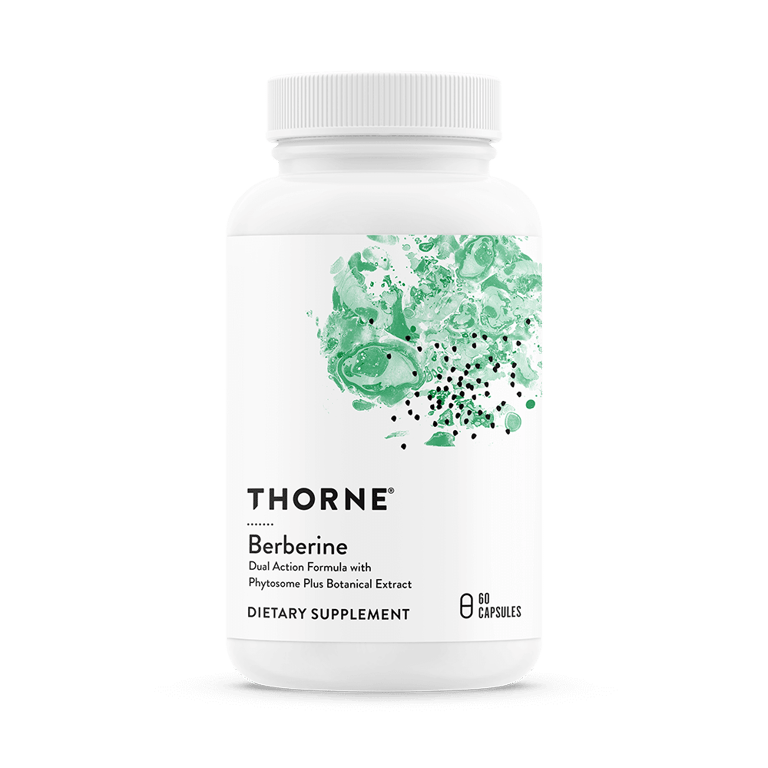
A powerful botanical for heart health, metabolic support, glucose balance, and GI support. NSF Certified for Sport®.
Mental Clarity, Focus, and Energy
- Indirect benefits: Better glycemic stability and reduced post‑prandial swings can support steadier daytime energy and focus in individuals with dysglycemia.
- No stimulant‑like effects; responses accrue over weeks.
Brain Health
- Mechanisms: Activates AMPK, modulates inflammatory signaling, and may influence monoamine pathways; human brain‑specific outcomes are limited.
- Improvements in metabolic health can indirectly support long‑term brain health.
Gut Health
- Antimicrobial and microbiome‑modulating effects may reduce dysbiosis; GI upset is common initially and improves with with‑meal dosing and titration.
- May support gut barrier and reduce diarrhea in select contexts.
Brain-Gut Axis
- Through microbiome shifts and lower inflammatory signaling, berberine may reduce gut–brain stress signals; direct axis trials are limited.
Evidence Summary
Benefit Area | Evidence Quality | Effect Noted | Notes |
Mental Clarity | Limited | Indirect via glycemic stability | Context dependent |
Focus Enhancement | Limited | Secondary to metabolic control | Not a stimulant |
Energy Support | Limited–Moderate | Smoother daytime energy | In dysglycemia |
Brain Health | Limited–Moderate | Anti‑inflammatory and AMPK activation | Heterogeneous endpoints |
Gut Health | Moderate | Microbiome modulation; diarrhea support | GI upset possible |
Brain–Gut Optimization | Emerging | Lower inflammatory crosstalk | Indirect evidence |
Typical Dosing Instructions
- Standard dose: 500 mg two or three times daily with meals (1,000–1,500 mg/day)
- Timing: With meals to reduce GI upset
- Form: Berberine HCl from reputable manufacturers
- Notes: Evaluate after 8–12 weeks; consider cycling or clinician oversight for longer courses
Safety Considerations
- General safety: Well studied but GI upset is common initially (nausea, cramping, loose stools)
- Common effects: GI symptoms that often improve over 1–2 weeks
- Contraindications and cautions: Can lower blood sugar; use caution with hypoglycemics/insulin. Potential interactions with cyclosporine and liver‑metabolized meds. Avoid in pregnancy unless clinician‑directed
- Monitoring: Track fasting/post‑meal glucose, GI tolerance, and stool pattern; reduce dose if persistent GI symptoms occur
References
- Efficacy and Safety of Berberine Alone for Several Metabolic Disorders: A Systematic Review and Meta‑Analysis of Randomized Clinical Trials, Frontiers in Pharmacology, 2021-04-26
- The Effect of Berberine on Metabolic Profiles in Type 2 Diabetic Patients: A Systematic Review and Meta‑Analysis of Randomized Controlled Trials, Oxidative Medicine and Cellular Longevity, 2021-12-15
- Efficacy and safety of berberine on the components of metabolic syndrome: a systematic review and meta‑analysis of randomized placebo‑controlled trials, Frontiers in Pharmacology, 2025-07-16