Disclosure: We may earn a commission if you buy through links on this page — at no extra cost to you. Learn more.
Statements on this site have not been evaluated by the Food and Drug Administration.
Products and information are not intended to diagnose, treat, cure, or prevent any disease. Learn More
Products and information are not intended to diagnose, treat, cure, or prevent any disease. Learn More
Summary
Ashwagandha (Withania somnifera) is an adaptogen used for stress reduction, sleep quality, and mood support. In adults, standardized root extracts show moderate improvements in perceived stress, anxiety, and sleep over 6–12 weeks, with possible benefits for focus under stress.
Our Picks
Ashwagandha | Thorne
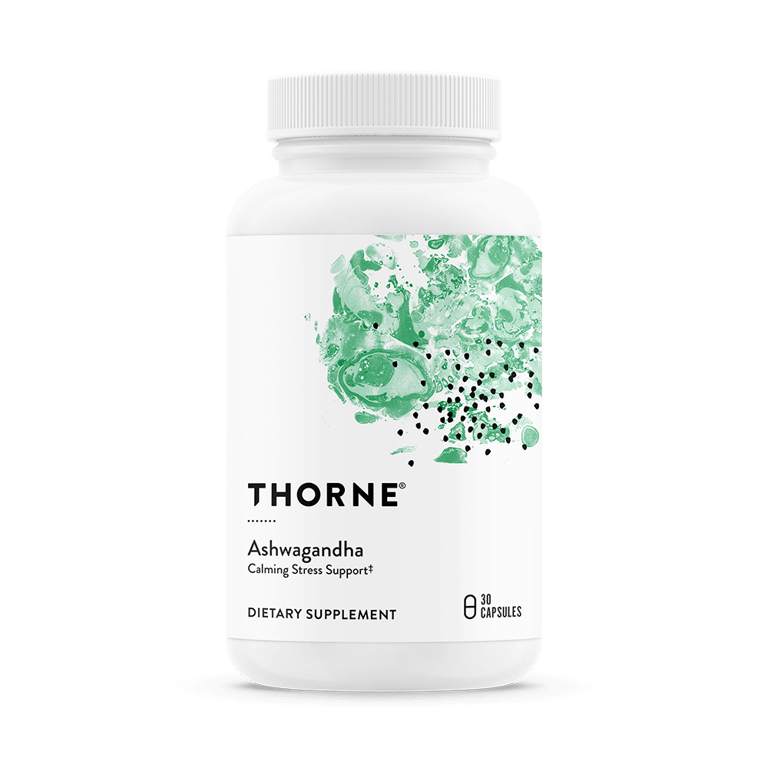
Unlock the power of calm with a highly concentrated ashwagandha extract, formulated to help your body adapt to and manage life’s daily stressors. NSF Certified for Sport®.
Mental Clarity, Focus, and Energy
- RCTs demonstrate reductions in perceived stress and anxiety with 300–600 mg/day (root extract, ~5% withanolides), which can indirectly improve focus and task persistence.
- Effects often appear within 2–4 weeks and accumulate through 8–12 weeks; acute stimulant‑like effects are not expected.
- Heterogeneity: extract quality, withanolide content, and baseline stress level influence outcomes.
Brain Health
- Mechanisms: Modulates HPA‑axis and cortisol, supports GABAergic tone, and may reduce oxidative stress and inflammation.
- Human evidence favors stress, anxiety, and sleep endpoints; long‑term neuroprotection remains uncertain.
Gut Health
- Generally well tolerated; mild GI upset in some users; taking with food improves tolerance.
- Direct human data on microbiome/barrier changes are limited; benefits are likely indirect via stress pathways.
Brain-Gut Axis
- By lowering stress reactivity and improving sleep, ashwagandha may reduce gut–brain inflammatory signaling and stress‑exacerbated GI symptoms.
Evidence Summary
Benefit Area | Evidence Quality | Effect Noted | Notes |
Mental Clarity | Limited–Moderate | Better focus under stress | Indirect via stress relief |
Focus Enhancement | Limited–Moderate | Task persistence | 6–12 weeks |
Energy Support | Limited | Reduced fatigue via sleep/stress | Not a stimulant |
Brain Health | Moderate | HPA and GABA modulation | Heterogeneous endpoints |
Gut Health | Limited | Mild GI effects possible | With food if sensitive |
Brain–Gut Optimization | Emerging | Lower stress signaling | Indirect evidence |
Typical Dosing Instructions
- Standard dose: 300–600 mg/day root extract (~5% withanolides)
- Timing: Evening or late afternoon for sleep benefits; morning is fine if not sedating
- Form: Standardized root extract; avoid leaf‑heavy or unverified products
- Notes: Evaluate after 6–12 weeks; consider cycling if daytime sedation occurs
Safety Considerations
- General safety: Generally well tolerated; possible drowsiness or GI upset
- Common effects: Calming, improved sleep; occasional vivid dreams
- Contraindications and cautions: Additive effects with sedatives; caution with SSRIs/SNRIs, benzodiazepines, and thyroid meds; avoid in pregnancy; monitor thyroid and cortisol‑related conditions
- Populations: Limited data in pregnancy and pediatrics; avoid unless clinician‑directed
- Monitoring: Track stress scores, sleep latency/quality, and daytime alertness; reduce dose if daytime sedation occurs